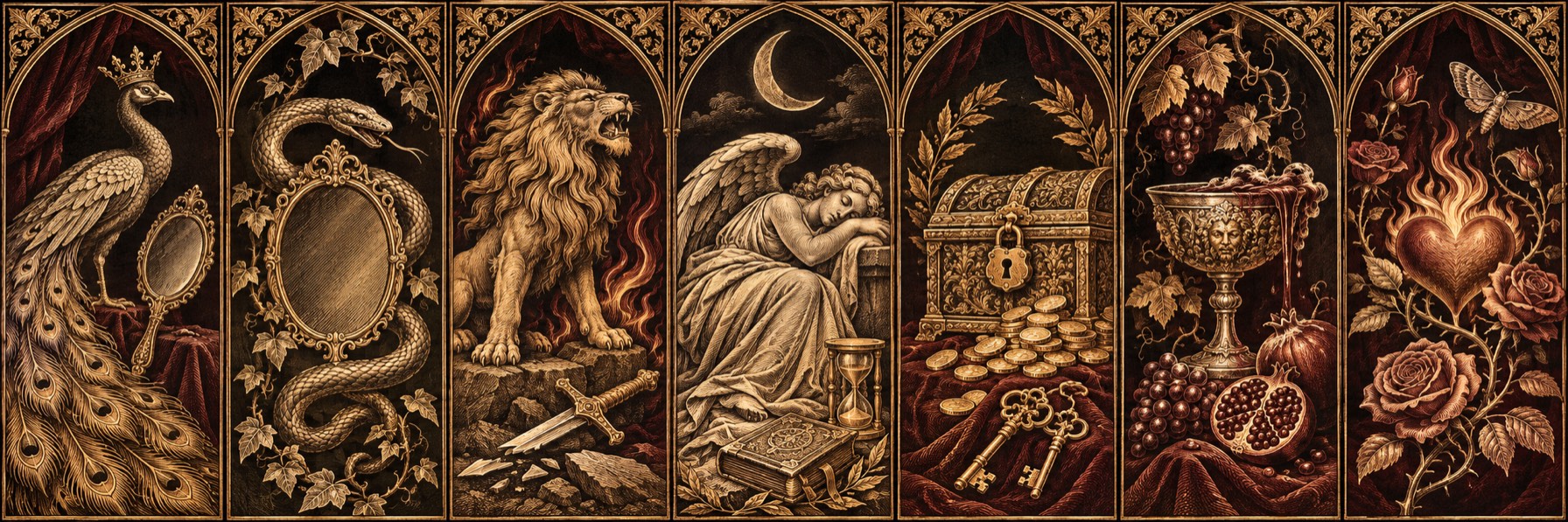
A leading Gluttony result means you recognized the statements about continuing beyond satisfaction. Traitmint uses everyday enjoyment and consumption as examples. It does not assess appetite, body size, food choices, or an eating disorder.
What Gluttony means here
Gluttony traditionally concerns excess in eating and drinking. The quiz adopts a broader, informal reading that includes entertainment. Its three items ask about continuing after enjoyment has faded, carrying on longer than intended, and reaching for more without checking whether it is wanted. This is an editorial definition for an entertainment quiz.
A situation behind the score
A video feed stops being interesting, but you keep opening the next item because it is there. Or an activity was meant to last a short while, yet the stopping point repeatedly moves. The issue described is unexamined continuation. Enjoying a long film or taking a genuine break does not, by itself, explain a Gluttony score.
Enjoyment and avoidance can happen together
Gluttony asks about continuing an activity; Sloth asks about the responsibility being avoided. If you keep scrolling instead of starting a task, both descriptions may feel familiar. Greed concerns getting or retaining resources, which is different from the moment-to-moment pull of another episode or another treat. The result keeps these scores separate.
Reading a Gluttony percentage
For example, answers of 4, 4, and 3 give 11 out of 12. A Gluttony total of 11/12 displays as 92%. That percentage is the share of points endorsed in these three items. It is not a probability, a health measure, or evidence that this description applies in every setting.
Each of the seven categories is calculated separately. Your percentages need not add up to 100, and the result has no population comparison or validated intensity band. See the complete scoring guide.
A question to take away
Think of an activity where you can notice satisfaction. What tells you that it has stopped being interesting, and what usually happens next? You can use a specific example without turning the result into a rule about what you are allowed to enjoy.
To explore your own responses, take the seven deadly sins test and read all seven scores together.
Related interpretations
Read the original questions and methodology. The 21-item quiz was drafted with AI assistance for Traitmint and has not undergone reliability or validity studies.
Conceptual sources
- Catechism, paragraph 1866: the traditional seven-category list and the meaning of capital vices.
- Oxford Medieval Studies: The Seven Deadly Sins and their Antidotes: historical context.
- Traitmint methodology: our original wording, item map and calculation. Historical sources explain the framework; they do not validate this questionnaire.