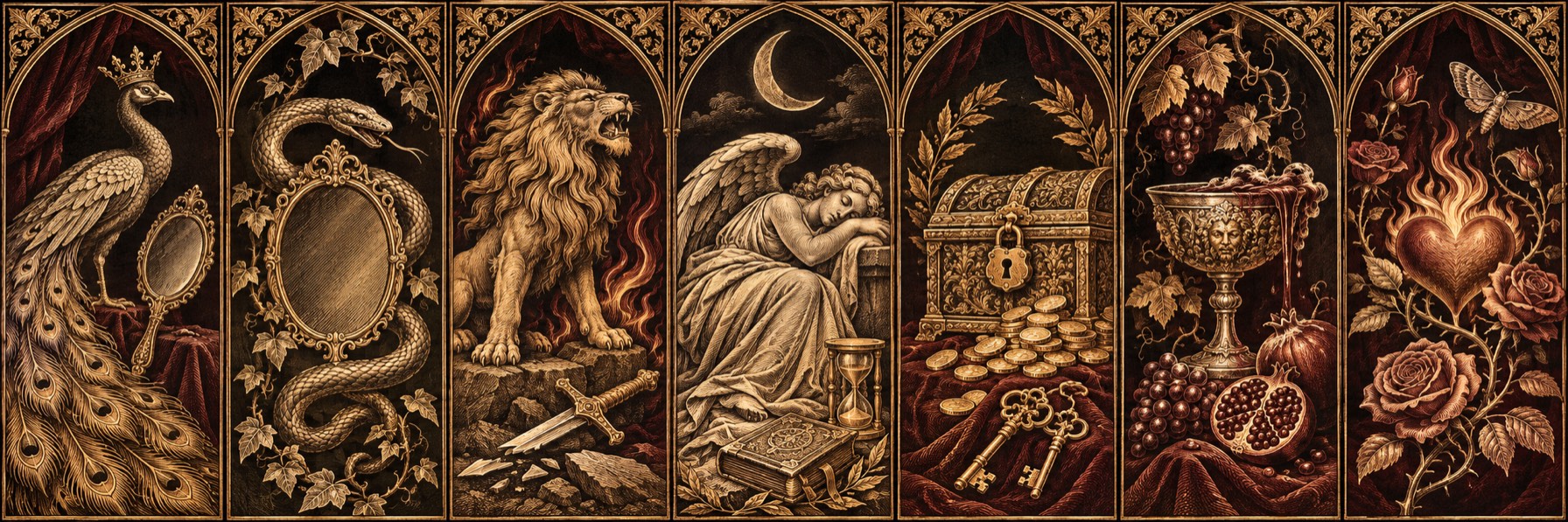
A leading Sloth result means you recognized this quiz’s descriptions of postponement and avoidance. The result does not identify why a task was delayed, how much capacity you had, or whether rest was needed.
What Sloth means here
The older concept of sloth or acedia includes a spiritual meaning that a brief web quiz cannot assess. Traitmint uses a limited everyday focus: an intention is already there, a workable first step is available, and the task is still avoided. That is why the wording refers to something you decided matters, rather than using productivity as a measure of personal worth.
A situation behind the score
You intend to send a short reply but open an easy distraction first. The reply remains unfinished until it creates another problem. This is the kind of gap the items describe. A task that is impossible with your time, energy, or resources is a different case. The questionnaire cannot tell the difference on its own, so your circumstances matter more than a single label.
Rest is not a score category
The quiz does not ask how busy you look or how many hours you work. It cannot evaluate illness, disability, exhaustion, or the support available to you. Gluttony focuses on continuing an enjoyable activity; Sloth focuses on avoiding a chosen responsibility. One distraction can fit both descriptions without proving a fixed trait.
Reading a Sloth percentage
For example, answers of 2, 2, and 2 give 6 out of 12. Three Neutral answers give Sloth 6/12, or 50%. That is the midpoint of the response scale, not a comparison with an average person. If every category receives the same total, the card names an even profile.
Each of the seven categories is calculated separately. Your percentages need not add up to 100, and the result has no population comparison or validated intensity band. See the complete scoring guide.
A question to take away
Choose one task you actually want to finish. What is the smallest useful start, and is it realistic today? If the start is not realistic, the next question may be about the plan or the support you need. A percentage cannot settle that question for you.
To explore your own responses, take the seven deadly sins test and read all seven scores together.
Related interpretations
Read the original questions and methodology. The 21-item quiz was drafted with AI assistance for Traitmint and has not undergone reliability or validity studies.
Conceptual sources
- Catechism, paragraph 1866: the traditional seven-category list and the meaning of capital vices.
- Oxford Medieval Studies: The Seven Deadly Sins and their Antidotes: historical context.
- Traitmint methodology: our original wording, item map and calculation. Historical sources explain the framework; they do not validate this questionnaire.