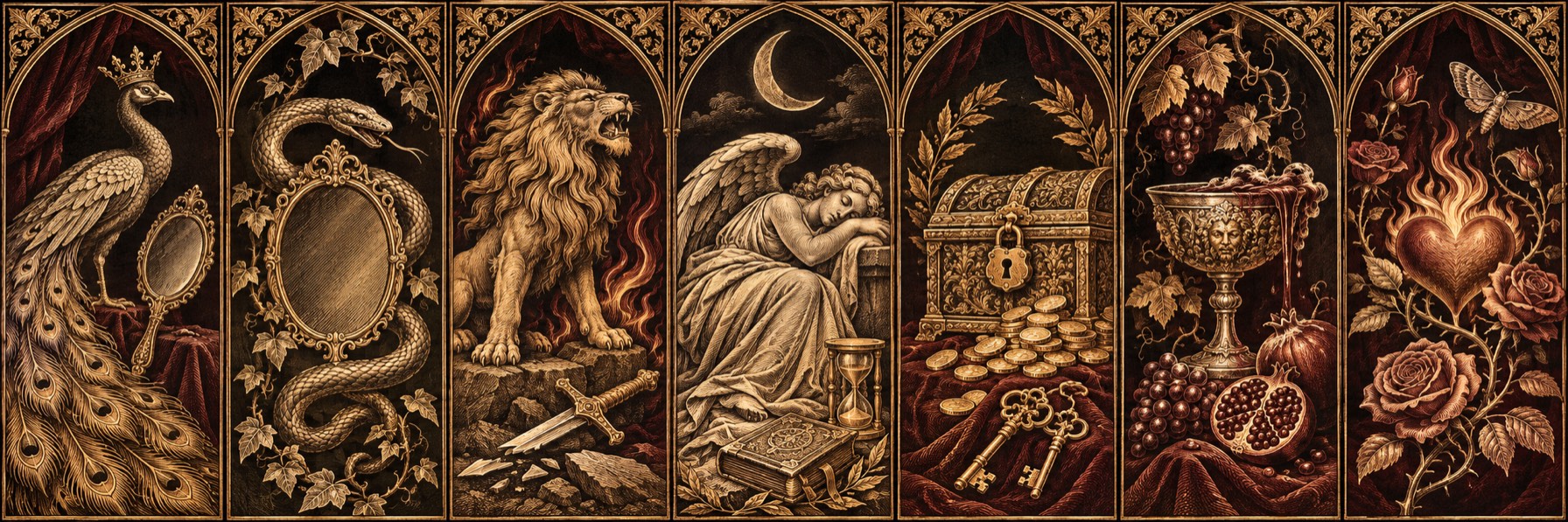
A leading Lust result means the attraction-related statements received your strongest agreement. This quiz uses non-graphic wording about compatibility, priorities, and impulse. It does not measure sexual behavior, orientation, relationship status, or moral worth.
What Lust means here
Lust has a sexual meaning in the traditional framework. Traitmint uses a deliberately narrower and non-graphic adaptation: attraction draws attention away from compatibility, the excitement of being desired takes over another priority, or an impulse keeps a spark going when slowing down would fit better. That adaptation is part of this quiz’s limits.
A situation behind the score
You feel strong chemistry with someone and pay less attention to whether you want compatible things. Another example is changing a plan mainly to keep a promising interaction alive, even though you would have preferred to pause. Attraction and affection are ordinary experiences. The questions concern choices made under their pull, not whether desire exists at all.
A leading result can still have a modest total
The headline compares your seven totals with each other. It does not compare you with other people. Lust can lead even when its percentage is below the midpoint, provided the other six totals are lower. The language of a dominant or leading result therefore means highest in these answers, not an independently established intensity.
Reading a Lust percentage
For example, answers of 2, 2, and 1 give 5 out of 12. A Lust total of 5/12 displays as 42%. If every other category totals 4 or less, Lust still leads. That example shows why the leading name and the absolute percentage answer different questions.
Each of the seven categories is calculated separately. Your percentages need not add up to 100, and the result has no population comparison or validated intensity band. See the complete scoring guide.
A question to take away
Recall a choice shaped by attraction. What else mattered to you in that situation, and did you have time to consider it? The aim is a concrete reflection on priorities, with room for your own values and circumstances.
To explore your own responses, take the seven deadly sins test and read all seven scores together.
Related interpretations
Read the original questions and methodology. The 21-item quiz was drafted with AI assistance for Traitmint and has not undergone reliability or validity studies.
Conceptual sources
- Catechism, paragraph 1866: the traditional seven-category list and the meaning of capital vices.
- Oxford Medieval Studies: The Seven Deadly Sins and their Antidotes: historical context.
- Traitmint methodology: our original wording, item map and calculation. Historical sources explain the framework; they do not validate this questionnaire.