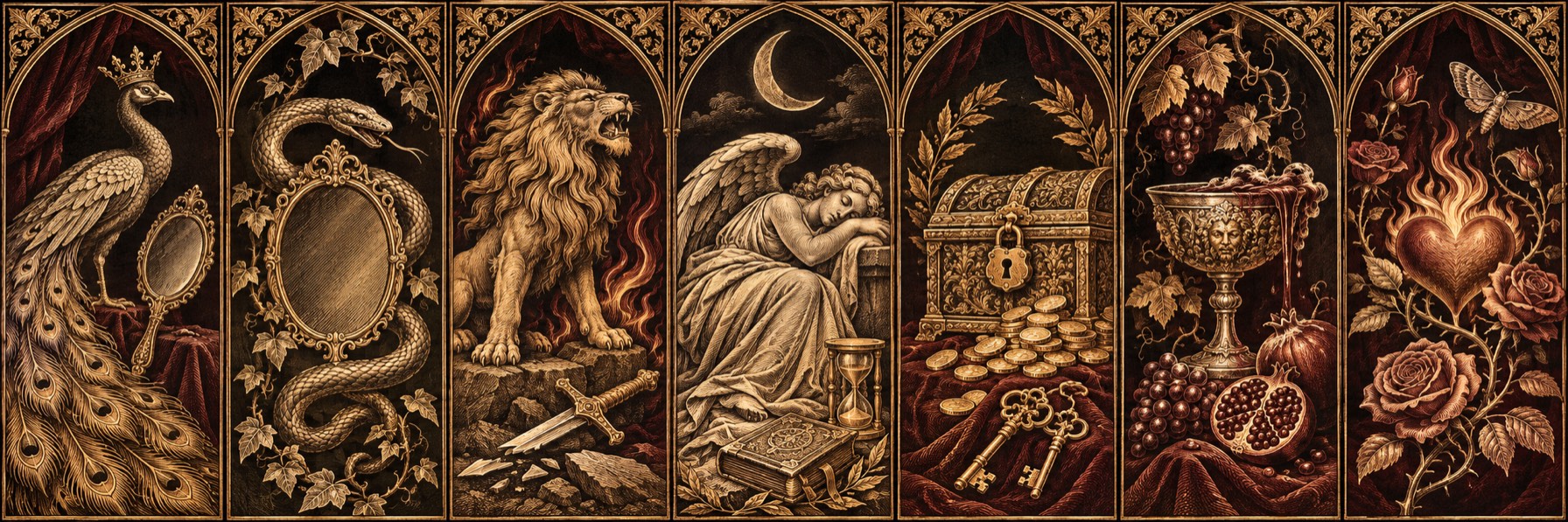
A leading Wrath result means the statements about sustained anger, blame, and retaliation received your strongest agreement. A short self-report quiz cannot decide whether an argument was justified or predict how you will act.
What Wrath means here
Wrath is a narrower label than anger in general. This quiz focuses on what happens after something goes wrong: replaying a disagreement in a way that sustains anger, immediately looking for someone to blame, or wanting the other person to feel the same hurt. The revised wording makes anger explicit so ordinary reflection after a conversation does not automatically count toward this theme.
A situation behind the score
You leave a tense conversation and replay it several times. Each replay strengthens the reply you wish you had delivered, and the irritation stays with you long after the practical issue is over. In another situation, an inconvenience happens and blame arrives before you know what caused it. These examples describe the wording, not a judgment about every angry response.
An emotion, a reaction, and the reason behind it
Someone can feel angry about unfair treatment while choosing a measured response. Someone else may be irritated by a small event and keep returning to retaliation. A questionnaire with three Wrath items cannot establish the cause or seriousness of either situation. Read the statements you endorsed rather than treating the percentage as an anger assessment.
Reading a Wrath percentage
For example, answers of 3, 2, and 2 give 7 out of 12. A Wrath total of 7/12 displays as 58%. The site does not assign a clinically defined low, moderate, or high band to that number. One raw point changes the displayed percentage by about eight points.
Each of the seven categories is calculated separately. Your percentages need not add up to 100, and the result has no population comparison or validated intensity band. See the complete scoring guide.
A question to take away
Think of one disagreement that has stayed with you. What outcome did you want from it: an explanation, an apology, a practical change, or a chance to get even? Naming the outcome gives the score a specific context without assuming that the card explains the whole event.
To explore your own responses, take the seven deadly sins test and read all seven scores together.
Related interpretations
Read the original questions and methodology. The 21-item quiz was drafted with AI assistance for Traitmint and has not undergone reliability or validity studies.
Conceptual sources
- Catechism, paragraph 1866: the traditional seven-category list and the meaning of capital vices.
- Oxford Medieval Studies: The Seven Deadly Sins and their Antidotes: historical context.
- Traitmint methodology: our original wording, item map and calculation. Historical sources explain the framework; they do not validate this questionnaire.