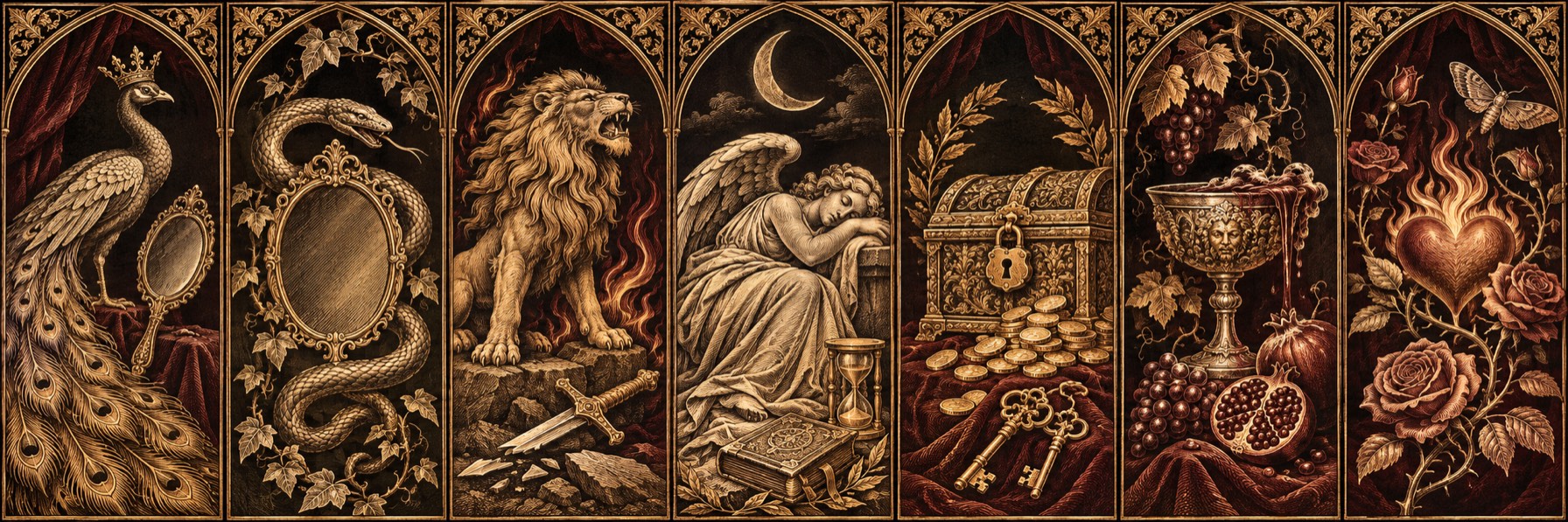
A leading Pride result means you gave this quiz’s strongest agreement to statements about recognition, resisting another person’s expertise, and defending a mistake. It describes those answers; it does not establish that pride is your defining personality trait.
What Pride means here
Pride in the traditional list concerns an exaggerated claim to importance. Being pleased with an achievement is a much broader everyday use of the same word. In Traitmint, the questions focus on what happens when credit, authority, or being right starts taking priority over the situation itself.
A situation behind the score
Imagine a group project goes well. You appreciate the outcome, but keep returning to whether your contribution was noticed before everyone else’s. At the next meeting, somebody knows more about the task, yet handing over the lead feels uncomfortable. These are the kinds of responses the Pride items ask you to recognize. They do not tell us whether you were previously overlooked or whether the proposed leader was trustworthy.
Pride and envy ask different questions
Pride here is about your own importance and recognition. Envy is about the sting of somebody else having an advantage. You can endorse both, or neither. If another person gets the credit, ask whether the difficult part is losing authority, feeling unfairly treated, or wanting the opportunity they received. The questionnaire cannot choose among those explanations for you.
Reading a Pride percentage
For example, answers of 4, 3, and 2 give 9 out of 12. A Pride total of 9/12 displays as 75%. An Envy total of 8/12 displays as 67%, only one response point behind. That gap is small even though the headline names Pride.
Each of the seven categories is calculated separately. Your percentages need not add up to 100, and the result has no population comparison or validated intensity band. See the complete scoring guide.
A question to take away
Choose one recent success. What part did you contribute, and what did somebody else contribute? If you were wrong about one detail, would acknowledging that detail change your view of the whole achievement? A useful reflection stays with the situation instead of turning the card into a permanent label.
To explore your own responses, take the seven deadly sins test and read all seven scores together.
Related interpretations
Read the original questions and methodology. The 21-item quiz was drafted with AI assistance for Traitmint and has not undergone reliability or validity studies.
Conceptual sources
- Catechism, paragraph 1866: the traditional seven-category list and the meaning of capital vices.
- Oxford Medieval Studies: The Seven Deadly Sins and their Antidotes: historical context.
- Traitmint methodology: our original wording, item map and calculation. Historical sources explain the framework; they do not validate this questionnaire.