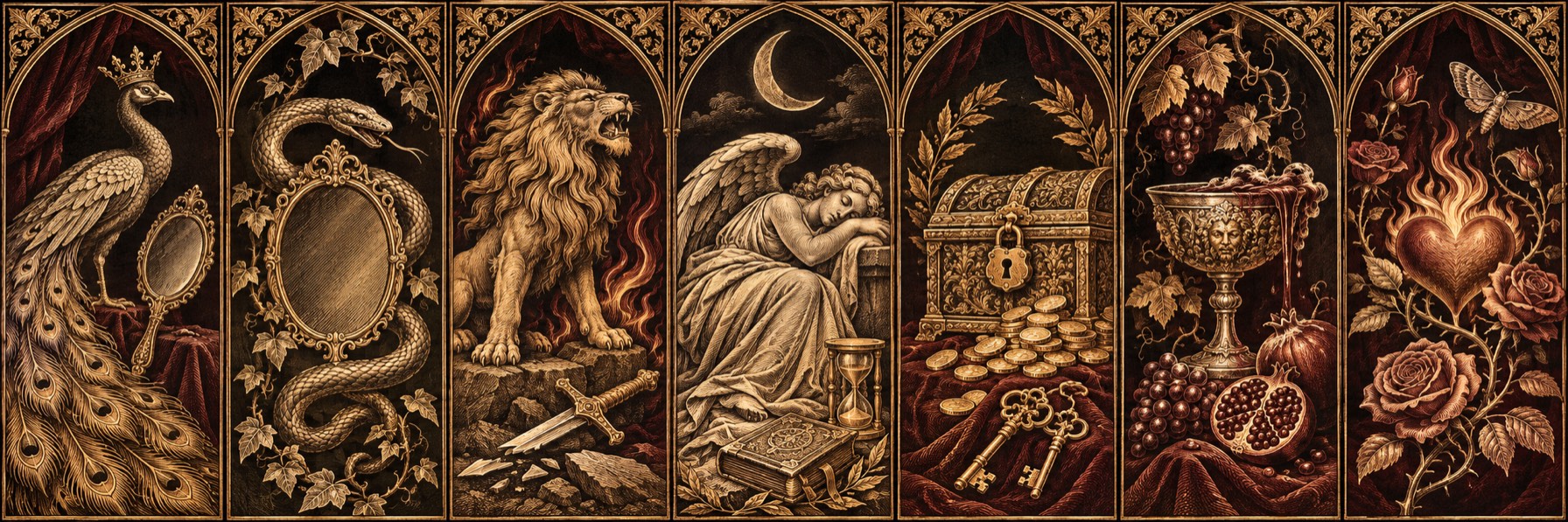
Use this directory to explore Traitmint’s Seven Deadly Sins Test before or after answering the questions. The free test is the place to make your own illustrated result card. The pages below explain the names, the calculation and the meaning of each possible leading result.
Understand the test
- The seven deadly sins and their meanings
Explore each traditional name, a modern everyday example, its limits and the distinction between the seven sins and the seven virtues. Start here when a term is unfamiliar.
- Results and scoring guide
Follow an answer through the calculation. Read worked examples, why percentages are independent, how ties and all-zero answers appear, and what a shared result link can restore.
- Questionnaire methodology
Check every original question, the category it contributes to, the wording history and the limits of the method. This page also explains why another website’s same-name test may work differently.
Read each result
Each interpretation describes a result within this questionnaire. You do not need to have taken the test to read one, and reading a guide does not assign you that result. The guides include situations to consider and explain where a short score stops being useful.
- Pride result
Understand the questions about recognition, authority and admitting a mistake, with an example that separates giving credit from competing for it.
- Envy result
Explore the response to another person’s advantage, including the difference between wanting an opportunity and resenting someone who received it.
- Wrath result
Read about sustained anger, blame and retaliation, and why a questionnaire cannot establish the cause or fairness of an argument.
- Sloth result
See how the items describe avoidance of a valued task, while leaving room for rest, resources and the capacity needed to begin.
- Greed result
Examine getting and keeping more, with examples distinguishing the quiz’s focus on enough and fairness from an ordinary wish for security.
- Gluttony result
Explore continuing beyond satisfaction or an intended stopping point. This interpretation concerns the entertainment questionnaire, rather than appetite or body size.
- Lust result
Understand the non-graphic questions about attraction and competing priorities, including how a leading result can still have a relatively modest total.
Put a result in context
Traitmint’s questionnaire is original, AI-assisted and offered for entertainment and reflection. It has not been scientifically validated. These guides explain what the statements and numbers mean; they do not turn the result into a diagnosis or a judgment of character. To create a new card from your own responses, take the Seven Deadly Sins Test.